


'%20x='0'%20y='0'%20height='100%25'%20width='100%25'%20%0A%20%20%20%20%20%20%20%20%20%20xlink%3Ahref='data:image/jpg;base64,/9j/2wBDAAYEBQYFBAYGBQYHBwYIChAKCgkJChQODwwQFxQYGBcUFhYaHSUfGhsjHBYWICwgIyYnKSopGR8tMC0oMCUoKSj/2wBDAQcHBwoIChMKChMoGhYaKCgoKCgoKCgoKCgoKCgoKCgoKCgoKCgoKCgoKCgoKCgoKCgoKCgoKCgoKCgoKCgoKCj/wAARCAAGAAoDASIAAhEBAxEB/8QAFgABAQEAAAAAAAAAAAAAAAAAAAMH/8QAHRAAAgEFAQEAAAAAAAAAAAAAAQMCAAQFESFBIv/EABQBAQAAAAAAAAAAAAAAAAAAAAT/xAAYEQADAQEAAAAAAAAAAAAAAAAAAQIRMv/aAAwDAQACEQMRAD8AybBtybJ5BEG2gFuktgCnkPrQ0feA73VrTJ207VMnKJbKETMhY0TrvtKUdytHzyf/2Q=='%3E%3C/image%3E%3C/svg%3E)

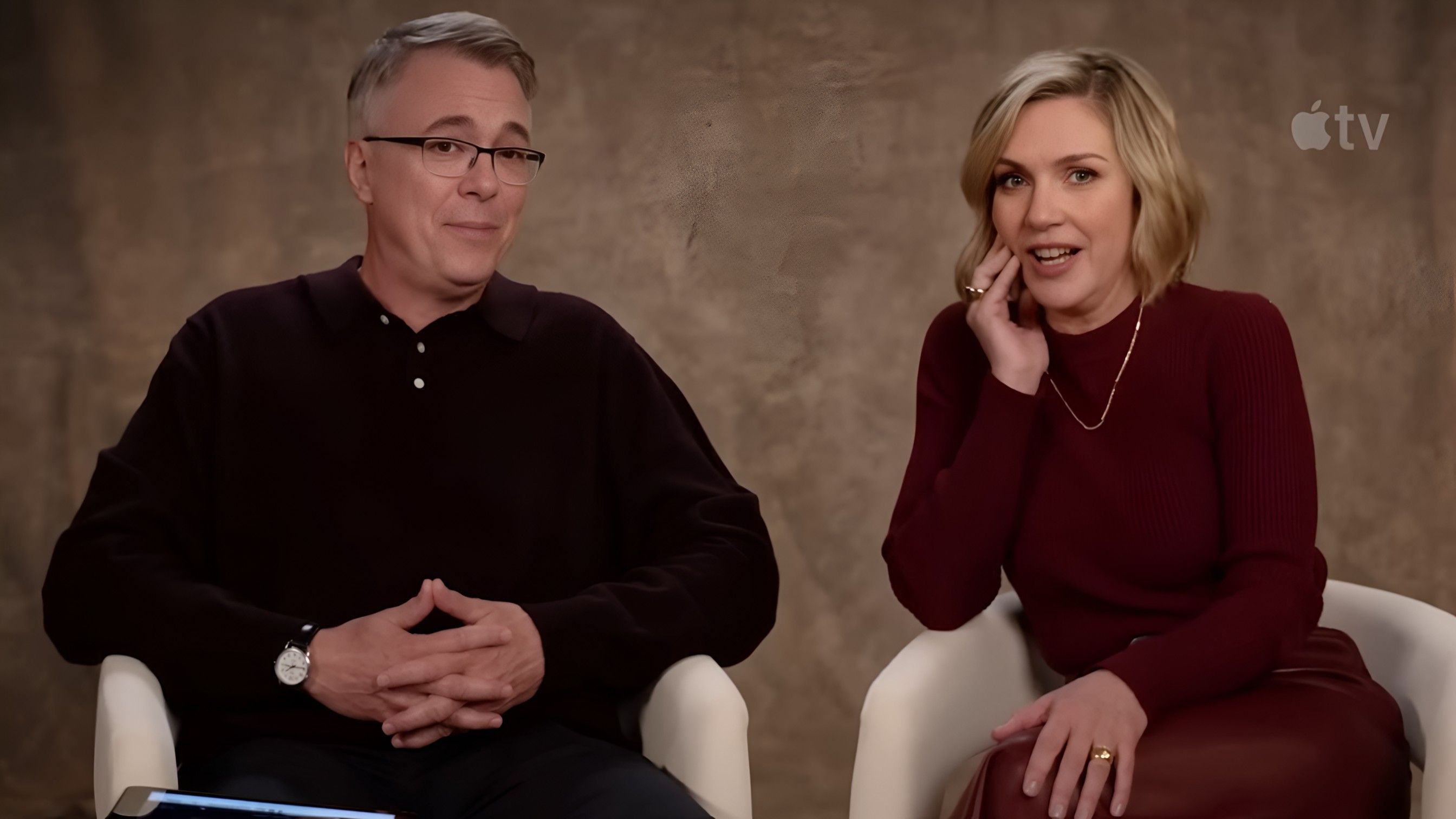
Pluribus not only brought together Rhea Seehorn and Breaking Bad creator Vince Gilligan again but also ignited one of the freshest casting tales in the TV world. The media quickly picked up on a sensational assertion: Seehorn signed up for the lead role in Pluribus without going through the script.
In an industry consisting of pages, contracts, and great caution, this detail alone was enough to make the fans stop scrolling for a moment. As per ScreenRant, Gillian said,
 Trending
"'we’ve been working together for 10 years.' And I was like, ‘No, we haven’t.’ Then, I did the math because of Better Call Saul, and it has been that long. And for somebody who I think is one of the best writers, television writers, probably just writers of all time in our generation, to say that they want to create a role for me — that’s a lot. I’m still working on taking that one in."
However, the narrative is definitely captivating, yet the true reason behind Seehorn's decision is multifaceted and much more informative about the values of trust, timing, and creative partnerships than the simplified version that was circulated online.
The phone call that started Pluribus
As per Seehorn’s own version, her casting for Pluribus began with a phone call from Gilligan shortly after Better Call Saul was finished. Pluribus was the active development stage at the time. Gilligan did not send a pilot script; he indeed told her that he was not ready yet.
Rather, Gilligan communicated the idea orally. He talked about the mood, the setting, and, crucially, the protagonist whom he was developing with her in mind.
The truth behind the story that went viral is that Seehorn did commit to Pluribus before reading a complete script. However, she was not committing to isolation.
Why the “no script” story needs context
One thing that Pluribus definitely wasn’t was an instance where an actor entered the project not knowing about the basic idea, style, or creative guidance. Gilligan communicated sufficiently about the series to indicate what kind of project it would be, an extremely dark, science fiction comedy based on a very unfulfilled character who had to save the world, in fact, from happiness.
There were no scripts initially, and each script was read as it was finished. She was confident in Gilligan’s pitch, his narration instincts, and their common creative past, not in her ignorance of what she was getting into.
That distinction is important because it shifts the view of Pluribus from a mad venture to a rare vote of confidence.
A role written specifically for Rhea Seehorn
The one detail that consistently comes up from Apple TV+ is that Gilligan had the leading part in Pluribus written just for Seehorn.
After many years of getting Kim Wexler's character together with her on Better Call Saul, Gilligan had a good understanding of her capability, control, and emotional accuracy. Pluribus demanded all of that plus a little more. The character, Carol Sturka, is not a classic sci-fi hero. She is jarring, miserable, and fighting against the very feeling that the rest of the world seems to be longing for.
She is the thematic anchor of the show, and Gilligan has been explicit that Seehorn’s talent to connect extreme ideas with emotional truth was vital to the very conception of the series.
Is Pluribus her first lead role since Better Call Saul?
Pluribus is Rhea Seehorn's first leading role in a television series after Better Call Saul. In between, she has participated in notable movie roles and top TV appearances.
Such a distinction is consistent with the way Apple TV+ has presented Pluribus as a project with a star focus that is built around Seehorn's performance rather than a typical ensemble.
Why this casting story resonated
The stories about the casting seldom receive coverage outside the circles of the industry. The story of Pluribus, however, did because it clicked: the very notion that trust can overcome the paperwork in Hollywood.
Nonetheless, the reality is a lot more interesting than the myth. Rhea Seehorn did not just say yes. Rather, she said yes with full knowledge of the creator's style, which she liked and trusted the writer. Pluribus not only marks a professional reunion but also an artistic dialogue that retraces the roots back years ago.
In the times that Intellectual Property rights dictate hiring, Pluribus is one of the few that's built around the actor, television that is conceived, shaped, and sold around the specific performer’s strengths.
The narrative of Pluribus and Rhea Seehorn's initial devotion isn't focused on the avoidance of due diligence but on the replacement of uncertainty with long-term cooperation.
As a result, Apple TV+ not only got one of the most daring series but also one of the most captivating casting choices of the decade.
Also read: Pluribus Episode 6: Release date news, time, streaming details, cast, and more


 Reply
Reply

